Printable Budget Worksheet (Free PDF)
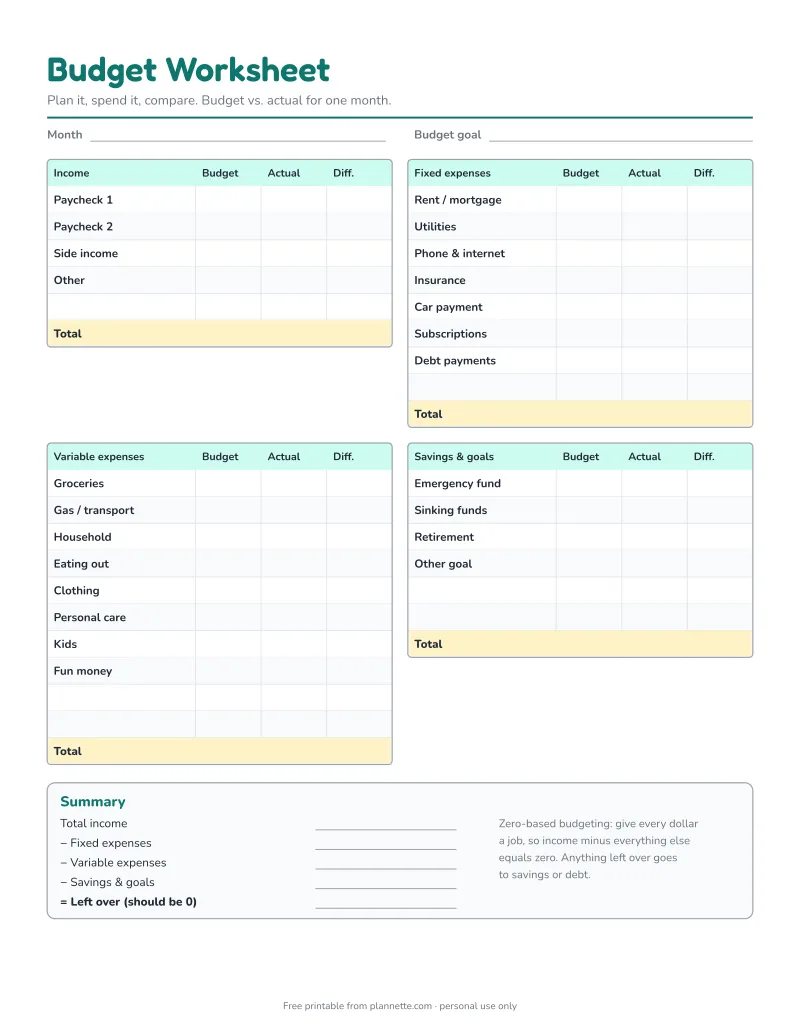
A one-page budget worksheet that shows what you planned, what you actually spent, and the difference. Fill in the "Budget" column at the start of the month and the "Actual" column at the end. The difference column tells you where to adjust next month.
Free printable · no sign-up
How to fill in the budget worksheet
1. Income. Write each paycheck and any other income you expect this month. Use the amount that actually lands in your account, after tax.
2. Fixed expenses. These stay about the same every month: rent or mortgage, utilities, phone, insurance, car payment, subscriptions and minimum debt payments.
3. Variable expenses. Groceries, gas, eating out, clothing and fun money change from month to month. Look at the last two or three months of bank statements to set realistic numbers.
4. Savings & goals. Treat savings like a bill: plan it first, not “if something is left over”.
5. Compare. At the end of the month fill in the “Actual” column and write the difference. A minus means you overspent in that line.
A simple example
| Section | Budget | Actual | Difference |
|---|---|---|---|
| Income | $4,200 | $4,200 | $0 |
| Fixed expenses | $2,150 | $2,150 | $0 |
| Variable expenses | $1,350 | $1,520 | −$170 |
| Savings & goals | $700 | $530 | −$170 |
Here groceries and eating out ran $170 over, and that money came out of savings. Next month you can either raise the grocery budget or plan meals ahead. Either way, now you know.
Tips for a budget that works
- Start with last month. Copy real numbers from your bank statements before you set any goals.
- Keep a “fun money” line. Budgets with zero room for treats rarely survive a month.
- Round up bills. If electricity is $87, budget $90. Small buffers prevent big surprises.
- Review weekly. Five minutes each Sunday beats an unpleasant surprise on the 30th.
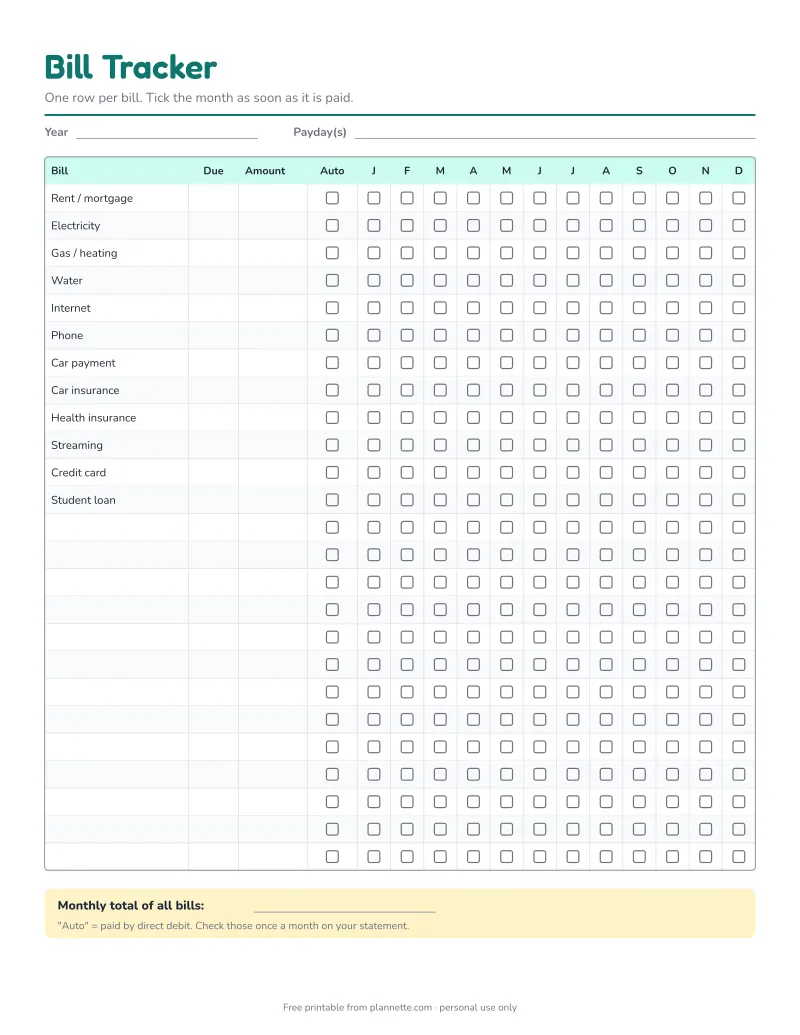
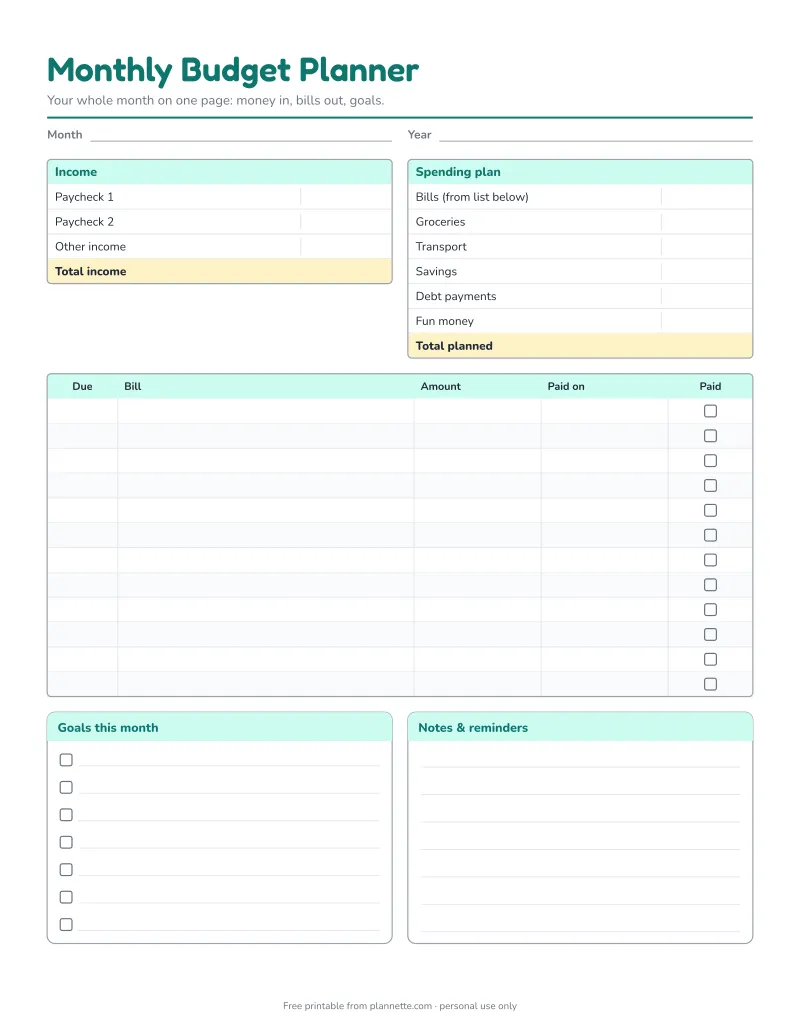
Want more room? The monthly budget planner adds a bill checklist and a weekly spending tracker, and the bill tracker keeps all due dates for the year on one page.
Questions
What is the difference between a budget worksheet and a budget planner?
A worksheet is one page for planning and checking a single month. A planner usually adds bill lists, weekly tracking and goals. If you want those too, use our monthly budget planner.
What should the "Left over" line show?
With zero-based budgeting it should be zero, because every dollar has been given a job, such as bills, spending, savings or debt. If money is left over, move it to savings or an extra debt payment.
Can I use this worksheet for a couple or a family?
Yes. Put each income in its own line and plan shared costs together. Many couples fill in the budget column together once a month.