Sinking Funds: What They Are + Free Printable Tracker
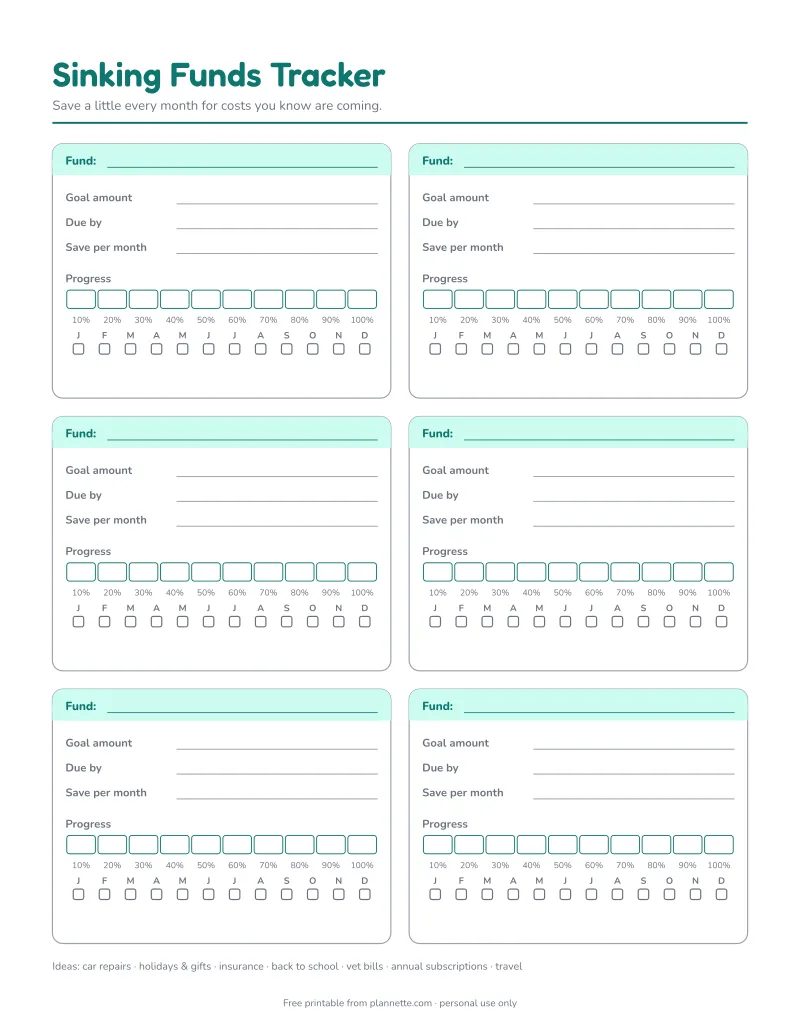
A sinking fund is money you set aside a little at a time for a cost you already know is coming, like car repairs, holidays or a yearly insurance bill. When the bill arrives, the money is already there. Below you will find how to set them up, plus a free printable tracker for up to six funds.
Free printable · no sign-up
How sinking funds work
Most budgets break not because of everyday spending but because of the bills that only come once or twice a year. A sinking fund turns one big bill into small monthly amounts.
The formula is simple:
Monthly amount = goal ÷ months until the money is needed
| Fund | Goal | Needed in | Save per month |
|---|---|---|---|
| Christmas gifts | $600 | 12 months | $50 |
| Car insurance (yearly) | $960 | 8 months | $120 |
| Car repairs & tires | $500 | 10 months | $50 |
| Summer holiday | $1,200 | 6 months | $200 |
| Back to school | $300 | 5 months | $60 |
Add up the last column and you know exactly how much needs to leave your paycheck each month to cover every irregular bill.
How to use the printable tracker
Page 1 has six fund cards. For each fund:
- Write the name, the goal amount and the due date.
- Calculate the monthly amount with the formula above and write it in.
- Every month you make the transfer, tick the month.
- Each time you reach another 10% of the goal, colour in one box of the progress bar.
Page 2 shows all funds on one page and has a contribution log. Write down every deposit and every withdrawal so you always know each fund’s balance, even if all the money sits in one account.
Ideas for sinking funds
Not sure where to start? Look at last year’s bank statements and mark every payment that was not monthly. Common ones:
- Holidays, birthdays and gifts
- Car insurance, registration, maintenance and new tires
- Annual subscriptions (streaming, software, memberships)
- Medical and dental costs not covered by insurance
- Pet costs and vet visits
- Back-to-school clothes and supplies
- Home repairs and replacing appliances
- Travel and summer activities
When a fund runs short
If a bill arrives before the fund is full, pay the rest from your regular budget and lower the goal for next year, or raise the monthly amount. The point is not perfection. Even a half-full sinking fund means half the bill is already paid.
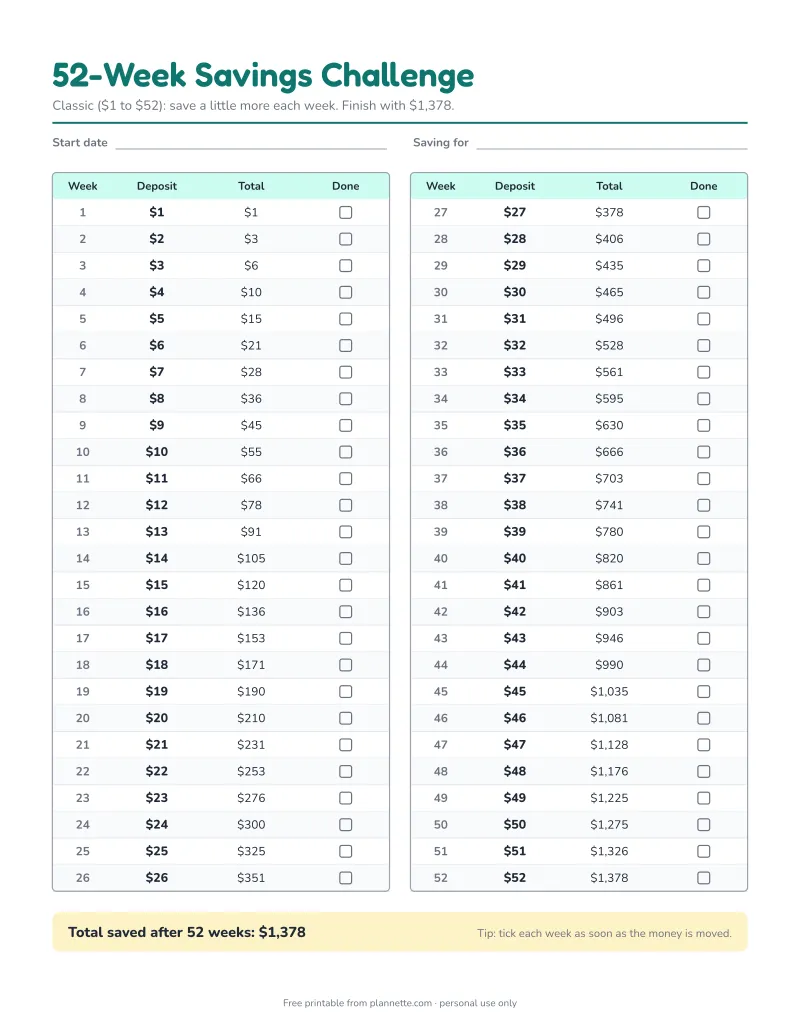
Want a simpler start? The 52-week savings challenge is a fun way to fill your first fund.
Questions
What is the difference between a sinking fund and an emergency fund?
An emergency fund is for costs you cannot predict, like a job loss or a sudden medical bill. A sinking fund is for costs you can predict, like Christmas, car registration or a new phone. Keeping them separate stops planned spending from eating your safety net.
How many sinking funds should I have?
Start with two or three for your biggest irregular costs. Most people end up with four to eight. More than that becomes hard to track by hand.
Where should I keep the money?
Many people use one savings account and track each fund on paper, which is exactly what this printable is for. Some banks also let you create several labelled savings pots inside one account.
How do I calculate how much to save each month?
Divide the goal amount by the number of months until you need it. A $600 bill due in 8 months needs $75 a month.